
Multicultural Christianity How Diverse Cultures Follow Jesus in Unique and Powerful Ways
Christianity has never belonged to one culture, one language, or one style of worship. From its first days, the faith crossed borders. The Gospel moved from Jerusalem into Greek-speaking cities, North Africa, Persia, India, Europe, and beyond. Every place it traveled, followers of Jesus asked the same core question in new ways: What does faithful discipleship look like here?
That question still matters. A Christian in rural Ethiopia, a Korean church member praying before sunrise, a Pentecostal believer in Brazil, and a Coptic Christian celebrating an ancient liturgy may all confess Jesus as Lord. Yet their songs, calendars, prayers, family customs, and public witness can look very different.
Multicultural Christianity helps us see that the global church is not a copy of one dominant culture. It is a worldwide family shaped by Scripture, history, language, suffering, celebration, and local wisdom. Learning from that family can deepen faith, widen compassion, and challenge narrow assumptions about what “normal” Christianity looks like.

Culture shapes how Christians hear and live the Gospel
The message of Jesus stays centered on his life, death, resurrection, and call to follow him. Culture shapes how people receive that message, describe it, and practice it.
For some communities, the Gospel speaks with special power to honor and shame. The good news is not only that sin can be forgiven, but that Christ restores dignity and brings people into a new family. In other places, where individual choice is highly valued, Christians may focus more on personal faith, conscience, and individual conversion.
In cultures with strong family networks, becoming Christian may involve extended family conversations, community expectations, and deep concern for ancestors. In more individualistic settings, faith decisions may feel private. Neither setting is simple. Each one raises real questions about loyalty, identity, and obedience to Jesus.
Language also shapes faith. Bible translation is more than swapping words. Terms such as grace, sin, covenant, shepherd, kingdom, and salvation carry layers of meaning. A phrase that sounds clear in English may need careful teaching in a language with different social or religious assumptions.
Worship follows the same pattern. Christians pray with the words, rhythms, and gestures available to them. Some kneel. Some stand with raised hands. Some chant. Some dance. Some gather quietly around Scripture. Others sing with drums, choirs, guitars, bells, or acapella harmonies.
These differences do not mean Christians believe different gospels. At their best, they show how the same Gospel can take root in local soil without losing its center.
Christian traditions show faith through local expression
Across the world, Christian communities have developed practices that reflect both ancient faith and local culture. These expressions invite believers to see the church with wider eyes.
Ethiopian Orthodox Christianity carries an ancient African witness
The Ethiopian Orthodox Tewahedo Church is one of the oldest Christian traditions in the world. Its worship includes ancient liturgy, fasting practices, processions, sacred music, and a strong sense of continuity with early Christianity.
Faith is expressed through prayer, feast days, church art, and community life. White garments worn in worship, the sound of drums and sistrums, and reverence for the Ark of the Covenant tradition all give Ethiopian Christianity a distinct character.
This tradition reminds the wider church that African Christianity is not new or imported. It has deep roots, rich theology, and a long memory.
Coptic Christians preserve faith through endurance
Coptic Orthodox Christians in Egypt trace their heritage to the earliest centuries of the church. Their liturgy, icons, fasting calendar, and use of Coptic language in worship connect present-day believers with generations before them.
Coptic Christianity also carries a history of endurance. Many Coptic communities have held to their faith while living as a religious minority. Their witness often centers on perseverance, reverence, and communal strength.
For Christians in places where faith feels comfortable, the Coptic tradition offers a sober lesson: discipleship often includes patience, sacrifice, and faithfulness under pressure.
Latin American Christianity blends joy, justice, and devotion
Christianity in Latin America includes Roman Catholic, Protestant, Pentecostal, and independent church expressions. Public processions, devotion to saints, Marian feasts, lively music, neighborhood prayer groups, and Pentecostal worship all play major roles in different communities.
In many Latin American settings, faith is closely tied to family, celebration, and concern for the poor. Churches may serve as places of worship, mutual aid, emotional healing, and social support.
Pentecostal churches across Latin America often emphasize the Holy Spirit, healing prayer, testimony, and passionate worship. Catholic base communities and other local groups have also highlighted Scripture, solidarity, and care for those facing poverty or injustice.
The Black church in the United States joins worship and liberation
The Black church in the United States has shaped American Christianity through preaching, gospel music, prayer, community leadership, and a long struggle for dignity and justice. Born in the context of slavery, segregation, and racial violence, it became a place of spiritual strength and public courage.
Its worship often brings together biblical hope, emotional honesty, call-and-response preaching, song, and testimony. The Exodus story, the cross, and the resurrection have carried special meaning in communities longing for freedom and repair.
This tradition shows how following Jesus can involve both personal salvation and public witness against injustice.
Korean Christianity highlights prayer, discipline, and mission
Korean Protestant churches are widely known for early morning prayer meetings, strong Bible study, sacrificial giving, and mission work. Many Korean Christians gather before work or school to pray, seek God, and intercede for their families and churches.
The practice reflects a culture shaped by discipline, community duty, and spiritual hunger. It also shows how local habits can form a distinctive Christian rhythm.
Korean Christianity has sent missionaries across the world, including to places where Korean believers must learn new languages and cultures in order to serve well. That missionary energy shows both the strength and the challenge of cross-cultural witness.

Sharing the Gospel across cultures takes humility
Cross-cultural mission has brought schools, hospitals, Bible translation, churches, and acts of deep compassion. It has also carried painful failures. At times, Christians confused the Gospel with their own national customs, political power, or cultural preferences. Some mission efforts ignored local wisdom or treated other cultures as inferior.
That history calls for humility, not silence. Sharing the Gospel still matters. Christians believe that Jesus is good news for all people. Yet the way that message is shared must match the character of Jesus.
A faithful cross-cultural witness listens before speaking. It asks careful questions.
What fears, hopes, and wounds shape this community?
What words already point toward grace, truth, sacrifice, and mercy?
What parts of local culture can receive and reflect the Gospel?
What practices conflict with the way of Jesus and need loving challenge?
Who should lead, teach, and make decisions within the local church?
The goal is not to make people adopt foreign habits. The goal is to invite people to follow Jesus in ways that are biblically faithful and culturally meaningful.
This requires discernment. Every culture carries beauty and brokenness. Western individualism can weaken community. Honor-based cultures can hide abuse or silence the vulnerable. Wealthy societies can confuse comfort with blessing. Poor communities can face pressure from survival needs. No culture should sit in judgment as if it has nothing to repent of.
The Gospel speaks to every culture with both affirmation and correction. It honors what is good, heals what is wounded, and challenges what harms love of God and neighbor.
Multicultural churches face real challenges
A multicultural church can sound beautiful in theory, but daily life can be hard. People bring different expectations about time, leadership, conflict, preaching, food, music, children, money, and authority.
Some cultures value direct communication. Others prefer indirect speech that protects relationships. Some worshipers expect silence before God. Others expect visible emotion. Some want sermons that teach verse by verse. Others look for story, exhortation, and practical encouragement.
Even simple choices can become loaded.
Which songs should be sung?
Which language should be used?
Who gets to lead prayer?
What holidays should the church observe?
How should grief, weddings, baptisms, and meals be handled?
What does respect for elders look like?
How do women and men participate in public ministry within that tradition?
When churches ignore these questions, one culture often becomes the default. People outside that culture may feel like guests rather than family.
Multicultural ministry calls for shared leadership, patient listening, and honest repentance when harm occurs. It also calls for practical choices, such as bilingual worship, translation, culturally diverse music, shared meals, and space for different prayer styles.
A church does not become multicultural by placing different people in the same room. It becomes multicultural when people share power, learn from one another, and let love shape common life.

Diverse Christian worship can deepen faith
Seeing how other Christians follow Jesus can unsettle familiar habits in a healthy way. It can reveal blind spots and renew wonder.
A quiet liturgy can teach patience to a believer used to constant sound. A joyful Pentecostal service can remind reserved Christians that bodies also worship God. An icon can invite slow attention to the mystery of Christ. A gospel choir can carry lament and hope in one song. A Korean dawn prayer meeting can challenge spiritual laziness. A Latino procession can show how faith moves into the street. An Indigenous Christian gathering may remind believers that land, memory, and community matter.
These practices are not spiritual souvenirs. They belong to real communities with real histories. Appreciating them means approaching with respect, not taking what feels interesting and ignoring the people who carried it.
Healthy appreciation includes three habits.
Learn the story behind the practice.
Ask why a tradition matters and how it formed over time.
Receive before evaluating.
Not every unfamiliar practice is unbiblical. Sometimes it is simply unfamiliar.
Stay rooted in Christ.
Christian diversity is richest when it remains connected to Scripture, worship, holiness, mercy, and love.
The global church also helps Christians resist cultural pride. No single group has a complete view of Jesus. Each community may notice something others overlook. Together, believers help one another see more clearly.
Multicultural Christianity points to the kingdom of God
The book of Revelation pictures a redeemed people from every nation, tribe, people, and language worshiping before God. That vision does not erase difference. The nations are present. Their praise is gathered, not flattened.
That image gives multicultural Christianity its deepest hope. Diversity in the church is more than a social value. It reflects the scope of God’s saving love.
When Christians listen across cultures, they gain a fuller sense of discipleship. They learn that following Jesus can look like fasting in Addis Ababa, singing in Atlanta, praying before dawn in Seoul, celebrating Simbang Gabi in the Philippines, gathering for Eucharist in Cairo, or sharing testimony in São Paulo.
Each expression has limits. Each can learn. Each can bless.
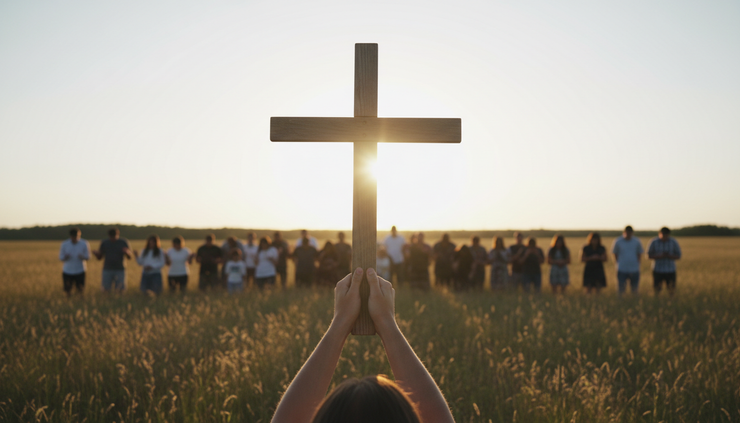
A wider church invites a deeper love
Multicultural Christianity asks believers to hold two truths together. The Gospel is one, and the people who receive it are many. Jesus calls every culture to repentance and renewal, yet he also meets people in their own language, history, music, grief, and joy.
Appreciating global Christianity does not require romanticizing every tradition or ignoring hard questions. It means recognizing that Christ is at work far beyond familiar walls. It means learning from believers whose worship may feel different but whose faith points to the same Lord.
A richer view of the church begins with curiosity. Visit a congregation from another tradition. Read Christian voices from outside your own background. Learn a hymn in another language. Share a meal. Ask better questions. Pray for believers who face pressures you have never faced.
The more Christians see the breadth of Christ’s body, the harder it becomes to confuse personal preference with faithfulness. The church becomes wider, humbler, and more grateful. And in that widened vision, followers of Jesus catch a glimpse of the kingdom where every people brings praise to God.


Comments